What Is Flavor?
Flavor is the combined experience of taste, aroma, texture, and temperature that you notice when eating.
Taste covers the five basic sensations; salt, sweet, sour, bitter, and umami.
Aroma contributes the majority of what we perceive as flavor through the nose. This is usually through "aromatics" which include onions, garlic, herbs, spices, and ginger.
Texture & mouthfeel, is about....the texture. How crisp, creamy, or tender food is shapes how we experience taste.
Temperature affects both aroma release and perception. Depending on the dish, too hot or too cold can remove the joy of the experience.
They all create a satisfying, memorable bite.
Simply put: Yummy
Seasoning: It's Complicated
Seasoning enhances a dish’s natural flavors using salt, spices, herbs, acids, fats, and sometimes heat or smoke.
At its simplest, it’s about adding salt or pepper to make food taste more like itself.
It's complicated as heck. Layering flavors, balancing taste elements (sweet, sour, salty, bitter, umami), timing additions to maximize aroma and texture. Even considering how ingredients interact chemically. Plus taking into consideration how fresh some of them are, its all very overwhelming.
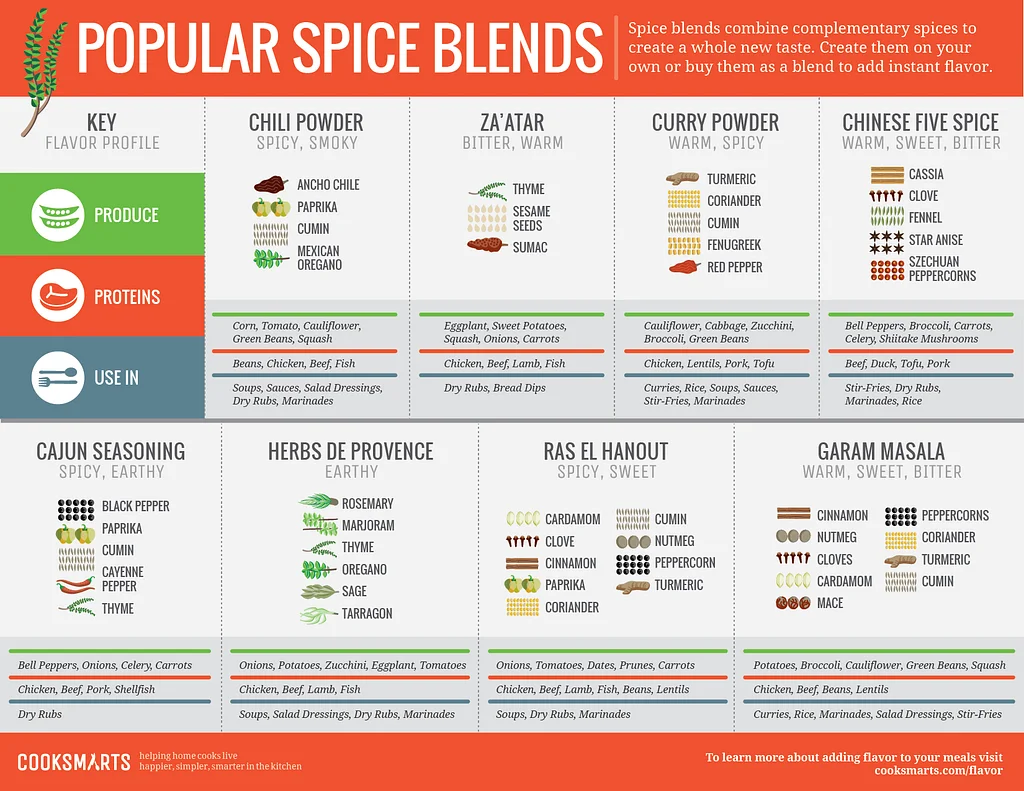
This is why premade seasoning blends are so popular.
You can see in the image how many combinations are available
Fond (The Secret Behind Sauces)
Fond is the layer of browned bits and caramelized juices that sticks to the bottom of a pan after searing meat, vegetables, or other foods. These bits are packed with concentrated flavor, and the reason why stainless steel is beloved for it's high heat retention.
Fond forms because of the maillard reaction, which happens when proteins and sugars in food are exposed to high heat. The water on their surface evaporates, and the proteins and sugars brown and stick to the pan.
When you later deglaze the pan with liquid, the fond dissolves into a rich base for sauces, giving your dish depth, complexity, and savory flavor.
The video uses wine but water or broth works just as well.
Common Tips
Taste Constantly – Check flavor at every stage, not just before serving.
Layer Flavors – Add salt, aromatics, herbs, spices, acids, and fats at different stages for depth.
Use Acid to Brighten – Vinegar, citrus, or wine balances fat and salt and adds lift.
Respect Fat – Butter, oils, or rendered fat carry flavor and unify the dish.
Mind Timing – Add delicate herbs or zest at the end, some seasoning lose flavor if used too early and some are better to start with.
Experiment Intentionally – Keep track of combinations that work, notice understand how ingredients interact.