How To Use A Recipe
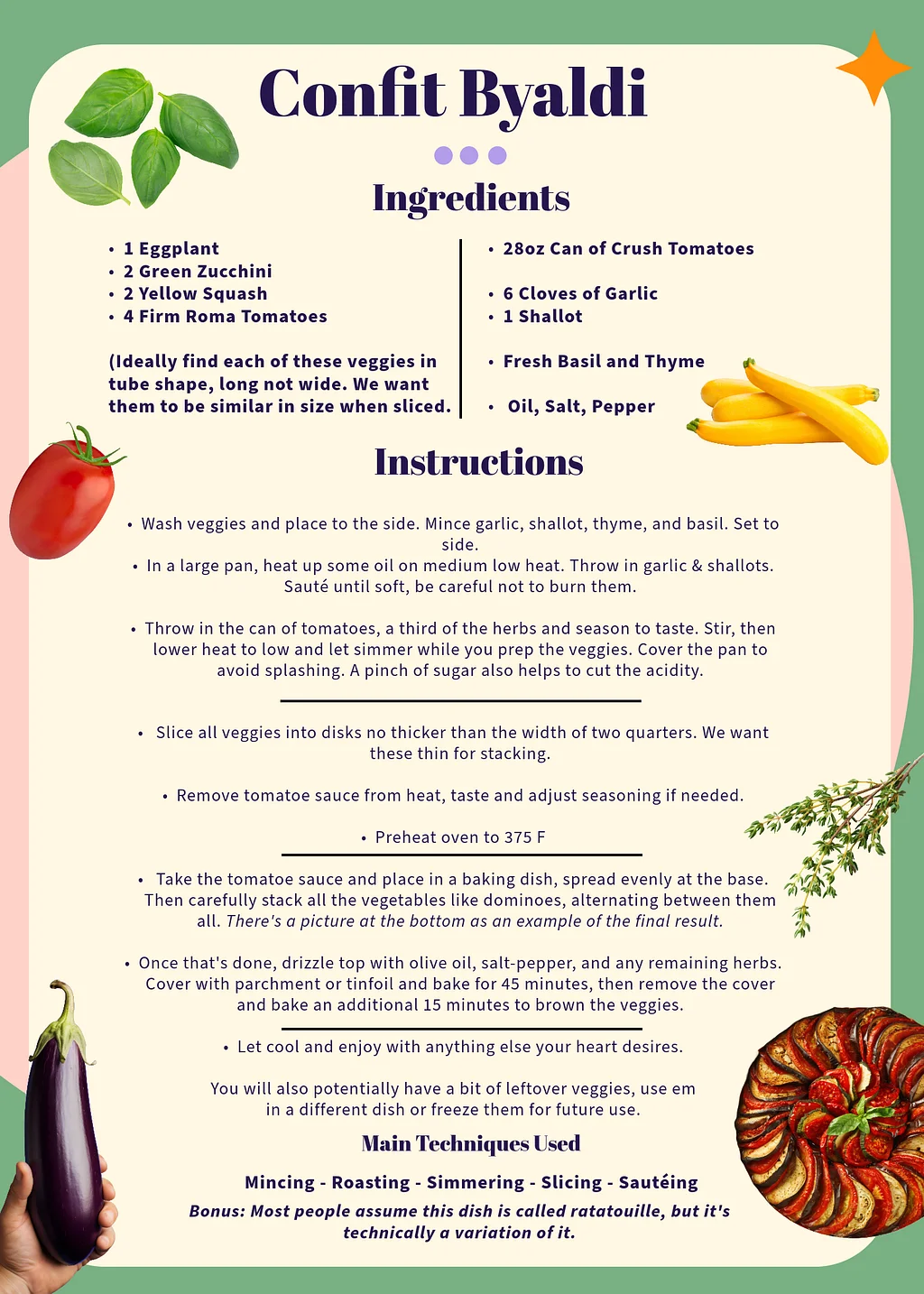
Free Recipe For You
Volutpat non odio pellentesque phasellus. In quis elit facilisis lectus eget vestibulum nisl fames. Nibh nibh viverra et facilisi pretium. Placerat egestas maecenas nunc urna elit elementum adipiscing.
Eget et enim, id faucibus ut mollis. Tristique iaculis faucibus duis pulvinar nulla tellus. In diam cursus nunc eget lorem nullam quisque. Nisl, erat viverra turpis morbi eget. Eget amet pulvinar dignissim viverra at amet ac.
We went over this in the principles section. But this is too important to not create a seperate page for.
Mise en Place is a fundamental practice in cooking that involves preparing, organizing, and arranging all ingredients, tools, and equipment before starting to cook. It saves time, reducdes stress, prevents mistake, promotes cleanliness, and makes it easier to handle multiple components at once.
___________________
What It Looks Like In Practice
Read Your Recipe Completely
Take note of every step before touching anything.
If you're a beginner, you're going to be following directions the whole way through, you don't get to skim through. What tools or ingredients do you need? How much time does the recipe claim to take? All of that is important as it's building up your knowledge base.
Plan The Order Of Operations
Ok, now identify which steps can be done in advance (marinating, thawing, soaking bEaNs). Determine what can be prepped well in advanced. Plan the cooking order. Determine what to cook first and what can cooked simultaneously.
• Consider timing: proteins might take longer, vegetables may cook fast. take longer, vegetables may cook fast.
Think ahead about plating or combining ingredients at the end.
Prepare Tools & Equipment
Make sure all your tools are ready for us or if you even have all you'll need. No point in starting if you ain't for the tools to work with. Ensure knives are sharp, cutting boards are all present, pots and pans be clean, and measuring tools not lost.
Plan The Order Of Operations
Determine what can be prepped well in advanced. What needs to be prepped during, and what you'll need throughout it all. What's to be cooked.
Consider timing: proteins might take longer, vegetables may cook fast.
Think ahead about plating or combining ingredients at the end.
Gather all ingredients
Make sure you have everything you need: proteins, vegetables, liquids, spices, oils, and garnishes.
Check freshness and quality, nothing worse than reaching for a bad tomato mid session. This is where the shopping takes place. Get your list ready before heading to the store. Get used to occasionally making substitutes when stores dont got watcha need.
Prepare Ingredients
Measure dry and wet ingredients accurately into small bowls or containers.
For spices, oils, and liquids, pre-portion exactly as the recipe calls for.
This step is especially important for baking, where precision matters.
Chop, dice, slice, peel, grate, or marinate as needed.
Group items according to when they'll be used.
Cover stuff if needed. Refrigerate anything that needs to remain cold if your prep is going to take some time.
Prepare ingredients
Chop, dice, slice, peel, grate, or marinate as needed.
Group similar items together (All vegetables in one bowl, all spices in another).
Cover stuff if needed. Refrigerate anything that needs to remain cold if your prep is going to take some time.
Prepare Tools & Equipment
Ensure knives are sharp, cutting boards are stable, pots and pans are clean, and measuring tools are ready.
Preheat ovens, stoves, or other appliances if needed.
Keep a trash bowl or compost nearby to reduce clutter.
Organize Your Workspace
Clear the counter of anything unnecessary.
Arrange ingredients and tools logically — often in the order they’ll be used.
Keep hot pads, spoons, ladles, and serving dishes within reach.
7. Plan the cooking order
• Determine what to cook first and what can cook simultaneously.
• Consider timing: proteins might take longer, vegetables may cook fast.
• Think ahead about plating or combining ingredients at the end.
8. Double-check everything
• Quick final review before starting: Are all ingredients prepped? Tools ready? Workspace clear?
• This step prevents mid-cooking surprises that can ruin the flow or even the dish.
⸻
Advanced Tips for Mastering Mise en Place
• Visual grouping: Keep ingredients visually organized by type or stage of use.
• Layering: For multi-component dishes, set aside separate sections for each component.
• Efficiency habit: Always clean as you go — wash and put away used utensils while cooking.
• Practice mindfulness: Treat mise en place as a mini-routine — it’s a chance to slow down, focus, and build your cooking rhythm.
• Adapt for small kitchens: If space is limited, use stackable containers or prep one ingredient at a time while keeping others organized nearby.
⸻
Takeaway
Mise en Place is the difference between chaotic, stressful cooking and smooth, confident cooking. Even a simple meal benefits — spending 5–10 minutes organizing your ingredients can save 30–60 minutes of confusion later. In essence, it’s the secret behind professional kitchens and a skill every home cook should develop.